Why Cognitive Thinking Cannot Fix High Cortisol
When stress is chronic, cortisol and epinephrine flood the bloodstream. The amygdala maintains high sympathetic tone, which shuts down digestive motility, tightens the trapezius muscles, and keeps resting heart rate elevated. Attempting to "think positive" or mentally calm down fails because the prefrontal cortex is operating under reduced oxygenation.
The nervous system operates primarily on bottom-up sensory signaling. Upwards of 80% of vagus nerve fibers are afferent, sending messages from the viscera and muscles upward to the brain. To reduce cortisol production, you must deliver physiological proof of safety through the physical body.
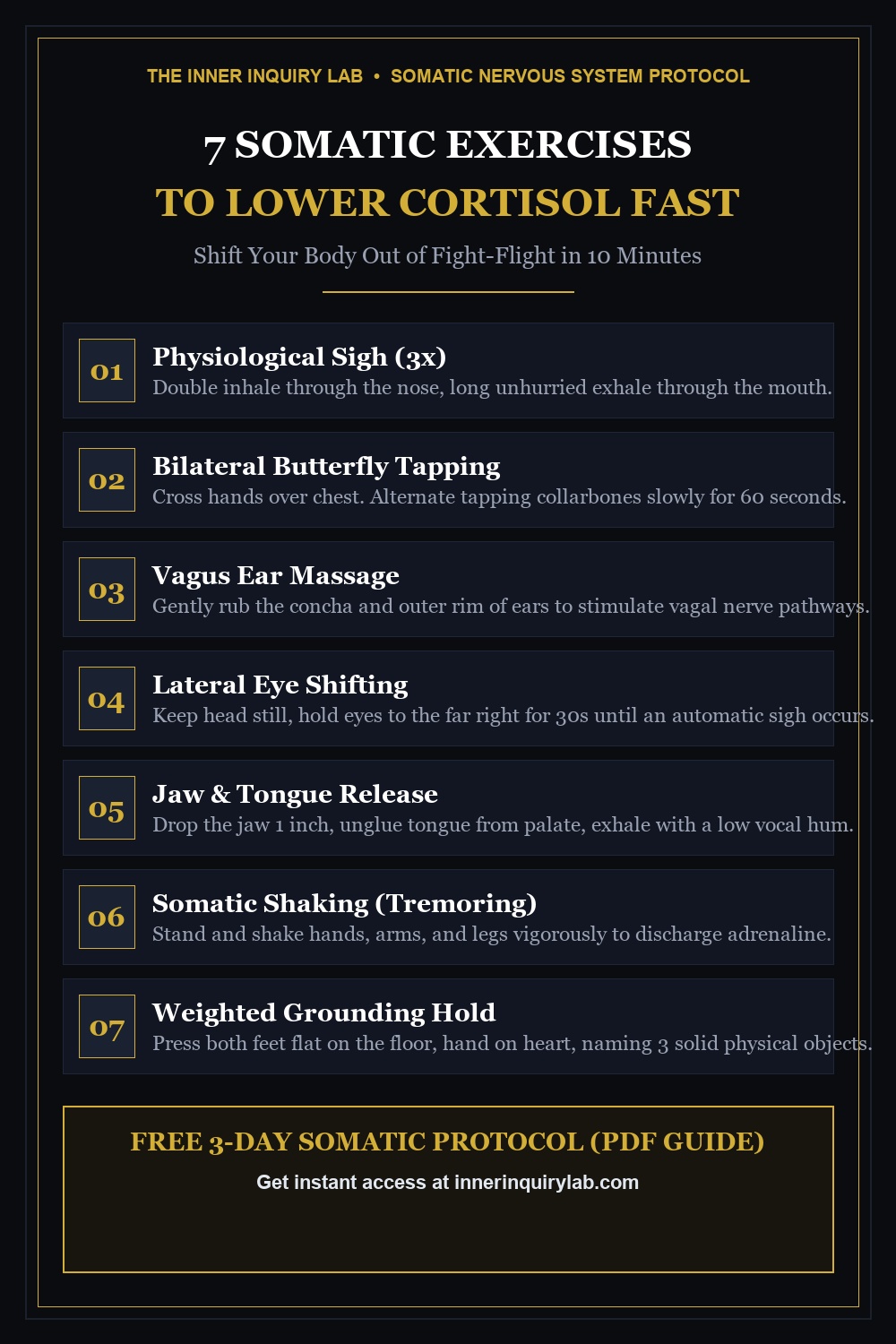
The 7 Somatic Interventions
1. The Physiological Sigh (3 Repetitions)
Perform two sharp inhalations through the nose—one deep inhale followed immediately by a quick second sip of air to re-inflate collapsed alveoli in the lungs. Release with a long, unforced exhale through the mouth. This mechanically drops heart rate within seconds by activating the parasympathetic brake.
2. Bilateral Butterfly Tapping (60 Seconds)
Cross your arms across your chest, resting hands on opposite collarbones or upper biceps. Alternate tapping rhythmically—left, right, left, right—at a steady tempo of one tap per second. This alternating tactile stimulation engages both cerebral hemispheres and reduces emotional charge.
3. Vagus Ear Massage (Concha Stimulation)
The auricular branch of the vagus nerve innervates the concha of the ear. Using clean thumbs and index fingers, gently rub the inner bowl and outer rim of both ears with circular, slow pressure for 90 seconds. Notice the immediate urge to swallow or take a deeper breath.
4. Lateral Eye Shifting (The Basic Exercise)
Keep your head facing forward. Without turning your neck, look with both eyes as far to the right as comfortable. Hold this position for 30 to 60 seconds until you experience an involuntary sigh, swallow, or yawn. Return to center, then repeat to the left.
5. Jaw and Tongue Release
The masseter muscles hold immense tension during chronic defensiveness. Deliberately drop your jaw one inch, let your lips part, and release your tongue from the roof of the mouth. Exhale with a low vocal hum ("VUUU") to create vibrational resonance down the vagal pathway.
6. Somatic Tremoring (Neurogenic Discharge)
Animals in nature shake vigorously after escaping a predator to release neurochemical stress. Stand upright with unlocked knees and intentionally shake your hands, wrists, shoulders, and legs for two minutes. This discharges motor tension stored in fascia.
7. Weighted Grounding Hold
Sit firmly in a chair with both feet flat on the ground. Place one firm hand over your sternum and the other over your lower abdomen. Feel the physical sensation of gravity anchoring your bones into the seat, confirming to the somatic self that the immediate moment is survivable.
Get The Complete Somatic Field Manual
Download our free 3-Day Shadow Work & Somatic Journal PDF, including printable morning vagal logs, evening body scans, and emotional boundary templates.
Download Free Protocol (PDF)Clinical References
- Bessel van der Kolk, M.D. (2014). The Body Keeps the Score: Brain, Mind, and Body in the Healing of Trauma. Viking.
- Rosenberg, Stanley (2017). Accessing the Healing Power of the Vagus Nerve: Self-Help Exercises for Anxiety, Depression, Trauma, and Autism. North Atlantic Books.
- Levine, Peter A. (2010). In an Unspoken Voice: How the Body Releases Trauma and Restores Goodness. North Atlantic Books.