The Biology of Impulsive Reactions
When an aggressive email arrives or a sudden financial setback occurs, the sympathetic nervous system activates in milliseconds. Blood shifts away from the prefrontal cortex toward large muscle groups. Vision narrows, heart rate climbs, and cognitive flexibility drops.
In this physiological state, an individual cannot evaluate complex long-term trade-offs. The brain demands immediate action to discharge the unpleasant sensation of panic. People hit send on vitriolic messages, make hasty resignations, or abandon working strategies. Recovering control requires addressing the bodily response before attempting mental logic.
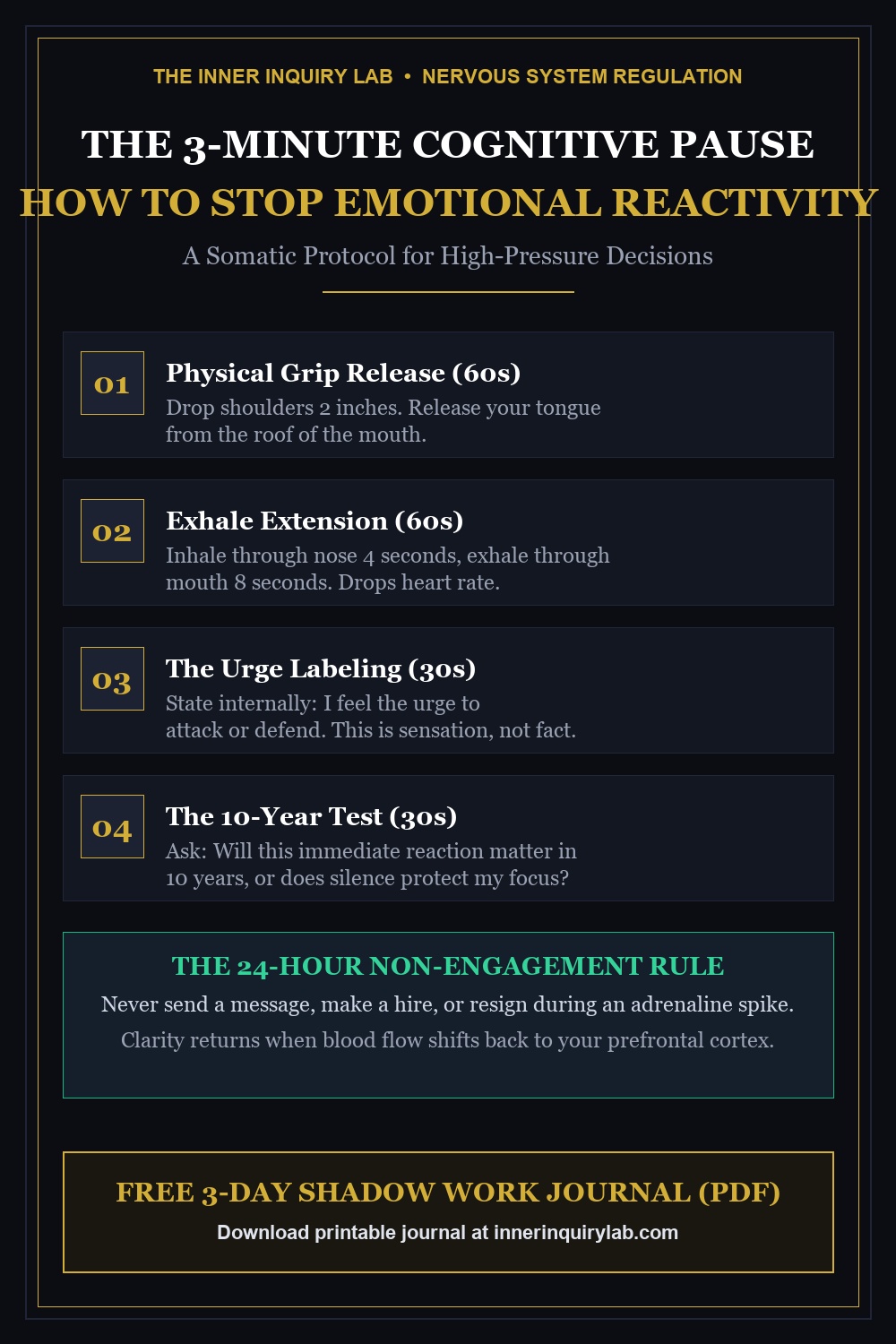
The 4-Stage Protocol
Stage 1: Physical Grip Release (60 Seconds)
Reactivity anchors in physical muscular tension. Intentionally drop both shoulders two inches. Release your tongue from the roof of the mouth and unclamp the jaw. Loosen the abdominal wall. Sending mechanical signals of relaxation upstream to the brainstem slows the release of norepinephrine.
Stage 2: Exhale Extension (60 Seconds)
The vagus nerve responds directly to respiration ratios. Inhale through the nose for 4 seconds, then exhale slowly through pursed lips for 8 seconds. When exhalations are double the length of inhalations, baroreceptors trigger the heart to slow its pacing, breaking panic physiology.
Stage 3: Urge Labeling (30 Seconds)
Instead of merging with the defensive urge, observe it as a temporary biological event. State internally: "My body feels an acute impulse to defend its status. This is electrical activity in the nervous system, not a command to act." This verbal separation activates the dorsolateral prefrontal cortex.
Stage 4: The 10-Year Temporal Test (30 Seconds)
Ask yourself: "Will the outcome of this specific argument or delay matter in ten years? Does firing back preserve my strategic authority, or does strategic silence protect my focus?" Marcus Aurelius noted that peace often comes from realizing how few things require an immediate opinion.
The 24-Hour Non-Engagement Rule
Under acute stress, enforce an unyielding operational constraint: never send a binding message, approve a major budget, or dissolve a partnership during an adrenaline spike. Wait until after a full night of REM sleep, which metabolizes neurochemical charge and restores objectivity.
Track Your Somatic Triggers
Download our free 3-Day Shadow Work Journal PDF containing somatic grounding logs, daily boundary templates, and evening inquiry prompts.
Download Free 3-Day Protocol (PDF)Citations & Foundational References
- Porges, Stephen W. (2011). The Polyvagal Theory: Neurophysiological Foundations of Emotions, Attachment, Communication, and Self-regulation. W. W. Norton & Company.
- Huberman, Andrew D. et al. (2023). Brief structured respiration practices enhance mood and reduce physiological arousal. Cell Reports Medicine.
- Seneca, Lucius Annaeus. De Ira (On Anger), Book II: On delaying retaliation to allow reason to intervene.